

home practice : ค้นหาหนังสือธรรมะ หน้า 5 / 6
หน้าหนังสือทั้งหมด
100
Harmony Within the Family
Part Four: Harmony Within the Family
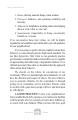
1. Dana: offering material things when needed;
2. Piyavaca: kindness, and speaking truthfully and
honestly;
3. Atthacariya: helpfulness in aiding others, like help
บทนี้กล่าวถึงความสำคัญของคุณธรรมสี่ประการ ได้แก่ Dana, Piyavaca, Atthacariya และ Samanattata เพื่อสร้างความสัมพันธ์ที่ดีในครอบครัวและชุมชน การปฏิบัติตนในแบบที่มีคุณธรรมจะทำให้เราได้รับความเคารพจากเพื่
21
The Path to Global Peace Through Meditation
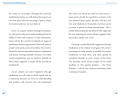
the centre of our bodies. Through this universal meditation practice, we will obtain the answers on our own about the true meaning of peace, where it is located and how we can attain it.
Once we acq
Through this universal meditation practice, we can discover the true meaning of peace and recognize the futility of war. By achieving inner happiness, we enhance our understanding and wisdom, leading
15
Daily Routine at Yuwakalayanamitra Camp
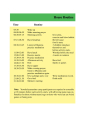
House Routine
Time Routine
05.30 Wake up
06.00-06.30 Make morning prayer
06.30-07.15 Morning activity Give alms,
The Yuwakalayanamitra Camp involves a comprehensive daily schedule encouraging spiritual growth and camaraderie among participants. Beginning with a morning wake-up at 5:30 AM, activities include morn
123
The Key to Success: Stopping the Mind
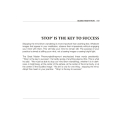
‘STOP’ IS THE KEY TO SUCCESS
Stopping the mind (from wandering) is more important than anything else. Whatever images that appear in your meditation, observe them impassively without engaging your min
Stopping the mind from wandering is crucial in meditation practice. The Great Master Phramongkholthepmuni asserts that the main goal is to achieve mental stillness, regardless of external distractions
142
Cultivating Your Merit Sphere: A Guide to Mindfulness
Reflect on your merit sphere, easily and comfortably. Develop a feeling that you have a bright merit sphere residing at the center of your body. It doesn’t matter whether the sphere may appear clearly
Reflecting on your merit sphere is essential for mental refinement and clarity. Begin by embracing a comfortable mindset while focusing on the bright merit sphere within your body. Understand that cla
128
Mappings with a Dharma Master
Mappings with a Dharma Master
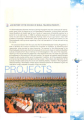
we first start with our own individual self and then work outward in all directions.
“The six directions start with the smallest unit, ourselves. We are in the center o
The text discusses the importance of individual self-awareness and ethical behavior in shaping relationships and society. It emphasizes that one must start with self-improvement through meditation and
69
Success of Moral Training Projects: Dhammadayada Program
ASE HISTORY OF THE SUCCESS OF MORAL TRAINING PROJECTS
The Dnammadayada (Dhamma Inheritors) Training Programme has been conducted for twenty-seven years since the beginning of the Dhammikaya Foundatio
The Dhammadayada Training Programme has operated for twenty-seven years, focusing on hands-on Buddhist practice for students. In 1996, the program was scientifically assessed, revealing that participa
40
Right Concentration and the Noble Eightfold Path
Right Concentration — Leads to Understanding and Knowledge Retention
Consciousness that is still and concentration are so closely related that they can be considered to be one and the same.
Students w
Concentration and stillness of consciousness are vital for academic success and personal growth. Practicing meditation enhances students' understanding and respect for learning. The Noble Eightfold Pa
8
The Role of Buddhism in Society
"Digested from speech of Pramạhā Boonthavy Vilaichakr Buddhism and Society
"Buddhism occurred 2500 years ago in India. Since then it has contributed a lot to the human civilization of both materialit
Buddhism, which originated 2500 years ago in India, has profoundly influenced human civilization both materially and spiritually. Its teachings guide individuals to avoid wrongdoing, purify minds, pro
53
Embracing Meditation for Perfection
56. TO SUCCESSFULLY
PURSUE PERFECTIONS,
ONE NEED TO EMBRACE MEDITATION
We were born to pursue virtues. Strive to perform good deeds. If you wish to successfully pursue Perfections, you need to “attac
In the pursuit of Perfections, one must focus on mental development rather than attachment to people. Meditation serves as a vital practice to overcome false views and achieve personal merit. As exper
39
Understanding Self-Mortification in Buddhism
It is for this reason that the Lord Buddha should want to start his sermon by instructing the ‘group of five’ that indulgence of the senses is unsuitable, base, ignoble, without benefit, unsuitable fo
In this text, Lord Buddha teaches that indulgence of the senses is unsuitable for a Buddhist monk and should be avoided. The practice of self-mortification, common among non-Buddhist ascetics, include
41
The Noble Middle Way in Buddhism
sense of security, but in the end, he will surely take advantage of us and leave us decapitated in the jungle.
It is for all of these reasons that the Lord Buddha taught that self-mortification is a n
The text discusses self-mortification as a non-Buddhist and dangerous practice, as taught by the Buddha. It emphasizes the importance of the Noble Middle Way, or the Eightfold Path, as the means to un
42
The Noble Eightfold Path and the Factors of Enlightenment
kings must accept with obeisance. This is because the Noble Eightfold Path is a supreme and noble practice.
2. A Wide Ocean: It can be compared to the wide ocean into which all rivers must flow. The
The Noble Eightfold Path is presented as a supreme practice in Buddhism, comparable to a vast ocean into which all rivers flow, embodying the essential Factors of Enlightenment. It comprises the Four
172
The Lesson of Arrogance: Insights from Pacccekabuddha
before him floating in the air. However, the hermit was so full of pride that he paid no respect. The Pacccekabuddha thus advised him:
“I am a Pacccekabuddha. As for you, who will go on to be a fully-
In this story, a prideful hermit encounters a Pacccekabuddha, who teaches him the importance of humility. The Pacccekabuddha's ability to float in the air humbles the hermit, prompting a change in his
198
Adapting Teaching Practices Through the Middle Way
how to adapt the teaching for our personal practice. How-ever, if we look at how Luang Phaw Wat Paknam explained these same words, compiled from sermons he gave on many occasions:
SECTION 2: THE MIDDL
In this exploration of the Middle Way as explained by Luang Phaw Wat Paknam, we learn about its significance in achieving insight and reality perception. The Buddha emphasizes the importance of the 'i
242
Glossary of Key Buddhist Terms
Kakusandha (P. the name of a käya samphassa (tactile contact: past Buddha) see sense-contact)
kalla (see embryonic precursor) käyasucarita (see wholesome
kāma (see sensuality) physical deeds)
kāmabhav
This text provides a glossary of key Buddhist terms, including definitions and insights into concepts such as Käyasucarita (wholesome physical deeds), Kāmabhava (sense-sphere existence), and various f
87
Untitled
meditation. She kept teaching even though not
strong enough to sit up in bed. She treated her
illness as if it were someone else's. Her student,
also disinterested in her illness sat in meditation
at
No content to summarize.

15
ตารางกิจกรรมการปฏิบัติธรรม
Dhammadayada Daily
03:45 a.m.
Wake up
02:00 p.m.
Meditation
Schedule
04:00 a.m.
Meditation
04:00 p.m.
05:00 a.m.
Morning Chanting
Break for personal
leisure
05:30 a.m. Practice of Mental
05:30 p.m.
So
Dhammadayada Daily 03:45 a.m. Wake up 02:00 p.m. Meditation Schedule 04:00 a.m. Meditation 04:00 p.m. 05:00 a.m. Morning Chanting Break for personal leisure 05:30 a.m. Practice of Mental 05:30 p.m. So

50
วิธีการฝึกสมาธิ
HOW TO
MEDITATE
We should first explain the principles of
meditation as a whole. Some will think of
meditation as a miserable practice, as a kind of
spiritual lesson or some kind of religious act or
a
HOW TO MEDITATE We should first explain the principles of meditation as a whole. Some will think of meditation as a miserable practice, as a kind of spiritual lesson or some kind of religious act or a

85
การพัฒนาจิตใจผ่านการเจริญภาวนา
LETTERS
4. KANLAYANAMIT LE
YANAMIT LETTERS FROM KANL
MIT LETTERS FROM KANLAYANAMIT LETTE
ROM KANLAYANAMIT LETTERS FROM KANLAYANAMIT
AMIT LETTER
6 FROM KAN
KANLAYAN/
MIT LETTERS
OM_KANLAY/
LETTERS FRO
ROM KANLAYANAMIT LETTERS FROM KANLAYANAMIT AMIT LETTER 6 FROM KAN KANLAYAN/ MIT LETTERS OM_KANLAY/ LETTERS FRO AYANAMIT LETTERS ROM KANLAY AMIT LETTE TTERS FROM S FROM KAN ANAMIT LET/ AS FROM KA NLAYA